

Travel Guides
Amazon Rainforest Tours from Manaus: What to Expect
In short
An Amazon tour from Manaus is a guided trip into the rivers and rainforest around the city: the Rio Negro, the Amazon River, and the channels, lakes and flooded forests of the region. Tours run from single-day excursions to 8-day expeditions and combine river travel by boat and canoe, guided jungle walks, wildlife observation, and visits to riverine and indigenous communities. All depart directly from Manaus, Amazonas, Brazil.
Most people arrive in Manaus knowing they want to "see the Amazon" but with little idea of what a tour actually involves. This guide is written from the other side of it, by the guides who run these trips. It explains what the days look like, how long you really need, when to come, and what you can and cannot expect to see, so you can choose the right tour instead of the loudest advert.
Why every tour starts in Manaus
Manaus is a city of around two million people in the middle of the rainforest, and it is the practical gateway to the central Amazon. It sits at the Meeting of the Waters, where the dark Rio Negro runs beside the pale, sediment-rich Rio Solimões for several kilometres before the two mix. Every tour we run leaves from here, because from Manaus you can reach genuinely wild forest within a few hours by boat.
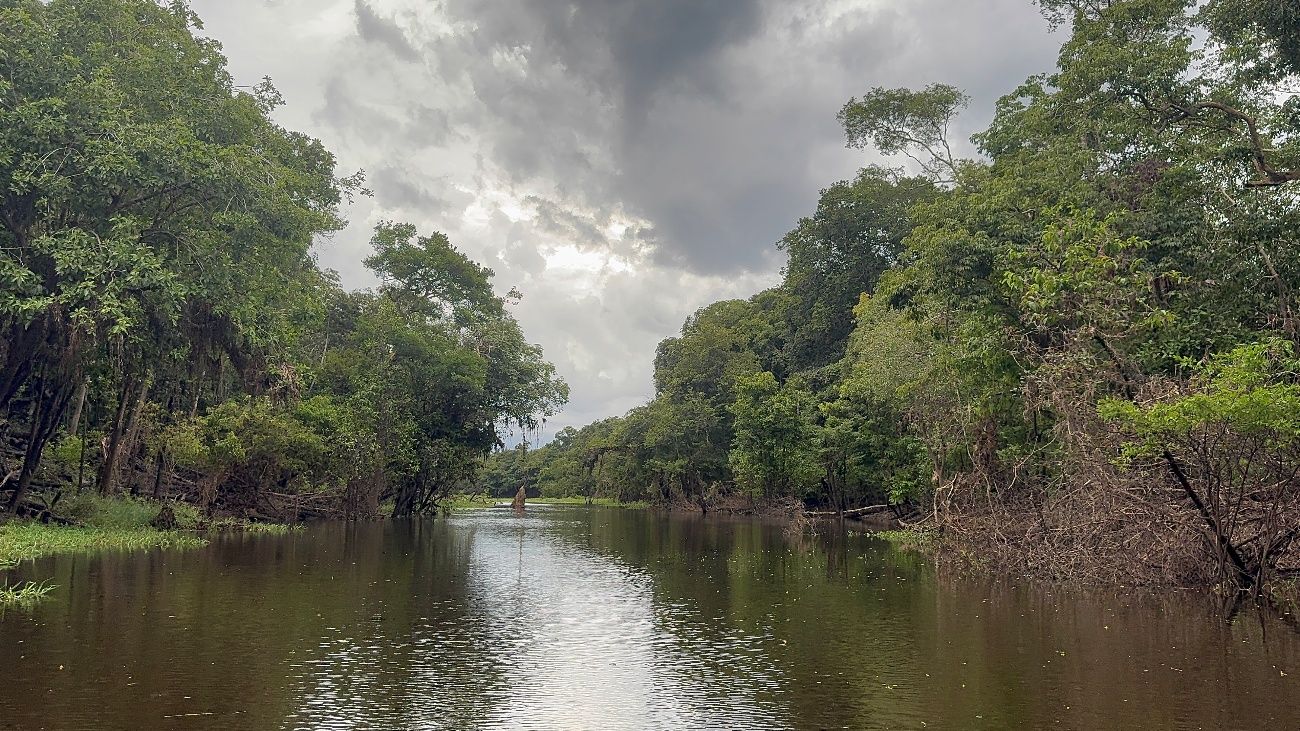
Manaus is our base, and from here we explore in every direction. We travel up the Rio Negro and its island archipelagos, along the Amazon River itself, and into the side channels, lakes and flooded igapó forest where wildlife concentrates. Multi-day expeditions use that reach to leave the day-trip zone behind; day tours stay closer to the city.
What actually happens day to day
A day on tour is built around when wildlife is active, not around a fixed timetable. Early morning and dusk are the busiest hours in the forest, so activities cluster there and the midday heat is used for travel or rest. A typical full day includes several of the following:
- Canoe trips through flooded forest and narrow channels, the quietest way to get close to birds and primates.
- Guided jungle walks on foot, reading tracks, plants, and the signs most visitors walk straight past.
- Wildlife observation from the water and from canopy viewpoints or towers where available.
- Community visits to riverine (caboclo) or indigenous villages, always by prior arrangement.
- Night activities such as a caiman search or night walk, when a different set of species becomes active.
- Piranha fishing and river swimming in safe stretches, weather and season permitting.
On multi-day trips you sleep in a mix of eco-lodges, a riverboat, or a remote forest camp depending on the route. Shorter trips like the 3-day Jungle Lodge Expedition keep a lodge as their base; longer ones like the 6-day Amazon Expedition push into deeper forest and camp.
How many days do you need?
The honest answer: a minimum of three days to get past the day-trip zone into forest that is quiet and undisturbed, and five or more if wildlife and remoteness are your priority. A single day from Manaus is worthwhile but stays close to the city. Here is how the options compare:
| Length | Best for | How far you reach | Example tour |
|---|---|---|---|
| 1 day | Short on time, a first taste | Near Manaus: Meeting of the Waters, dolphins, day channels | Pink Dolphins & Village |
| 2–3 days | First real forest immersion | Lodge-based, beyond the day-trip crowds | Jungle Lodge Expedition |
| 5 days | Wildlife, culture, variety | Rio Negro basin, igapó, communities | Amazon Explorers |
| 6–8 days | Remote, comprehensive, birding | Deep forest camps, multiple ecosystems | Ecological Expedition |
If you only have a day, a day tour is still worth doing. But the forest opens up with time, and the difference between day two and day five is large.
The best time of year to go
There is no bad season in the Amazon, only different ones. The region has a high-water season and a low-water season rather than a simple wet-and-dry, and each changes what you do. In high water the flooded forest is navigable by canoe and you glide between the tree canopies; in low water, beaches appear, trails open up, and walking becomes easier.
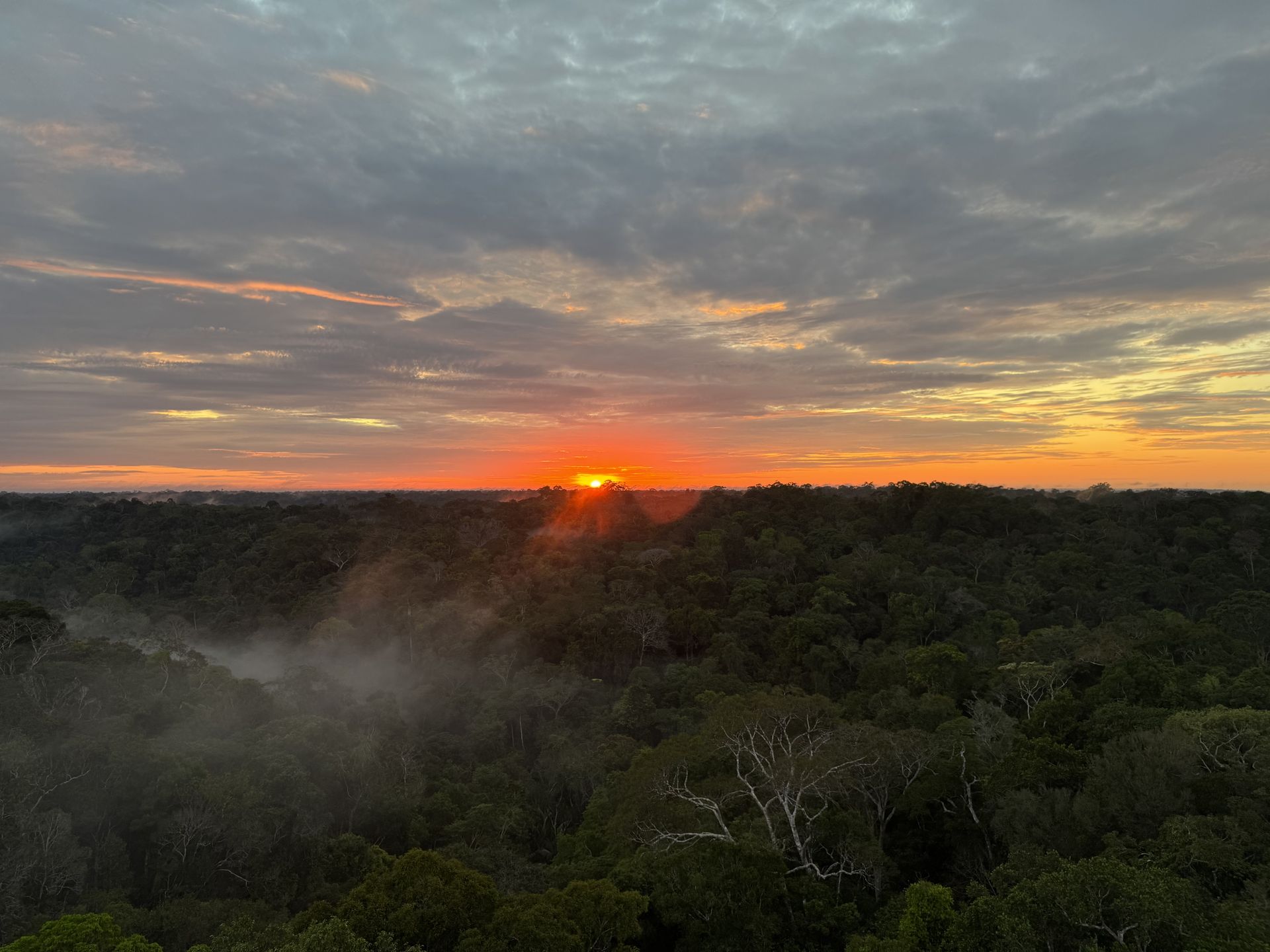
We cover this in depth in a dedicated guide (Best Time to Visit the Amazon: Month by Month, coming soon). The short version: come in high water for canoe-based flooded-forest trips, and in low water for walking and beaches. Wildlife is present year-round.
What wildlife you can realistically expect
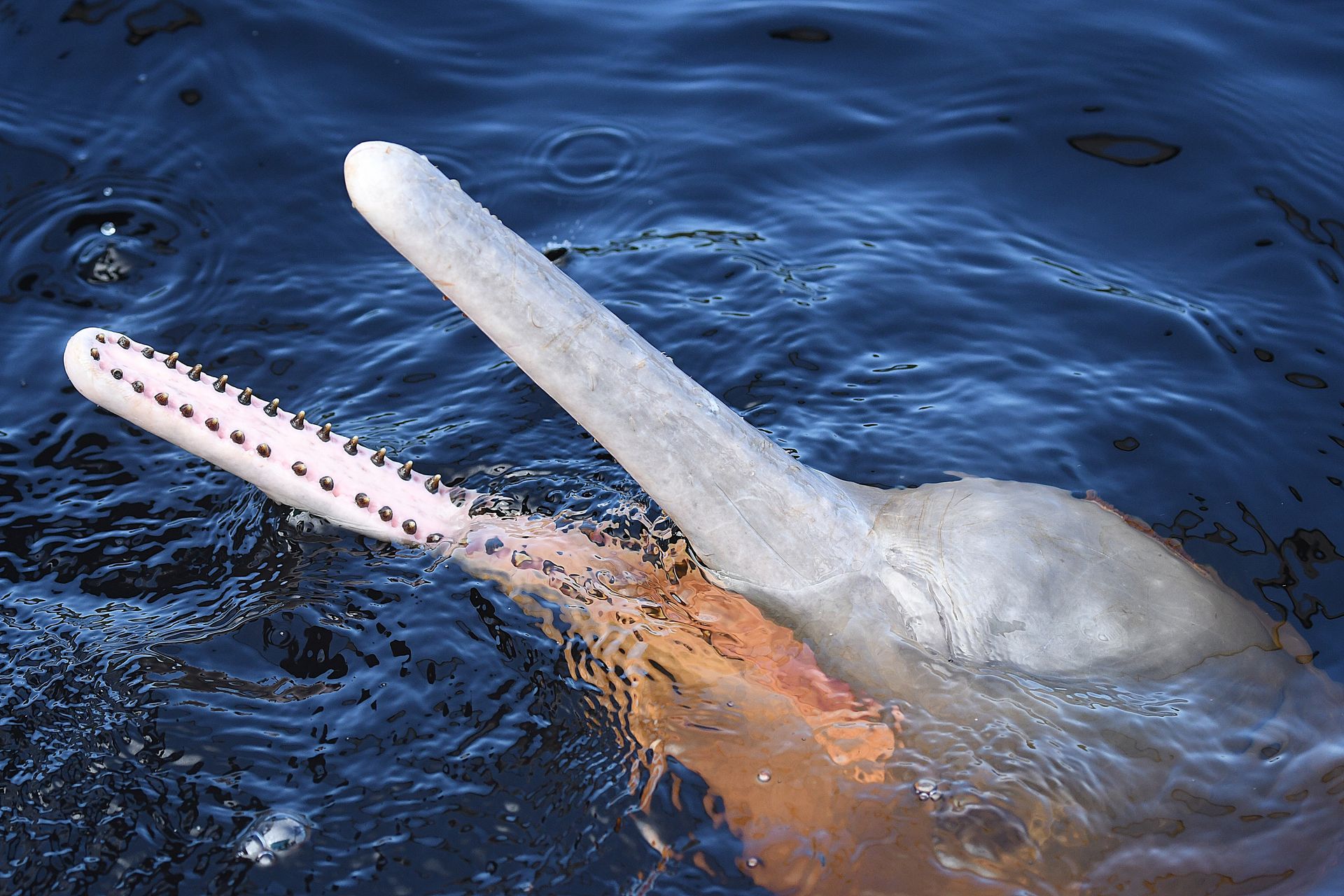
This is where honesty matters most. The Amazon is not a zoo, and no responsible operator can promise a particular animal. What we can tell you is what lives in the areas we visit and what is commonly seen there. On a typical trip you are very likely to encounter pink and grey river dolphins, several primate species, caimans on a night search, and a wide range of birds. Sightings of more elusive mammals are a matter of luck, patience, and time in the forest.
“People ask us to guarantee a jaguar. We can't, and anyone who does is selling you a story. What we guarantee is that we take you into their territory and teach you to read it.”
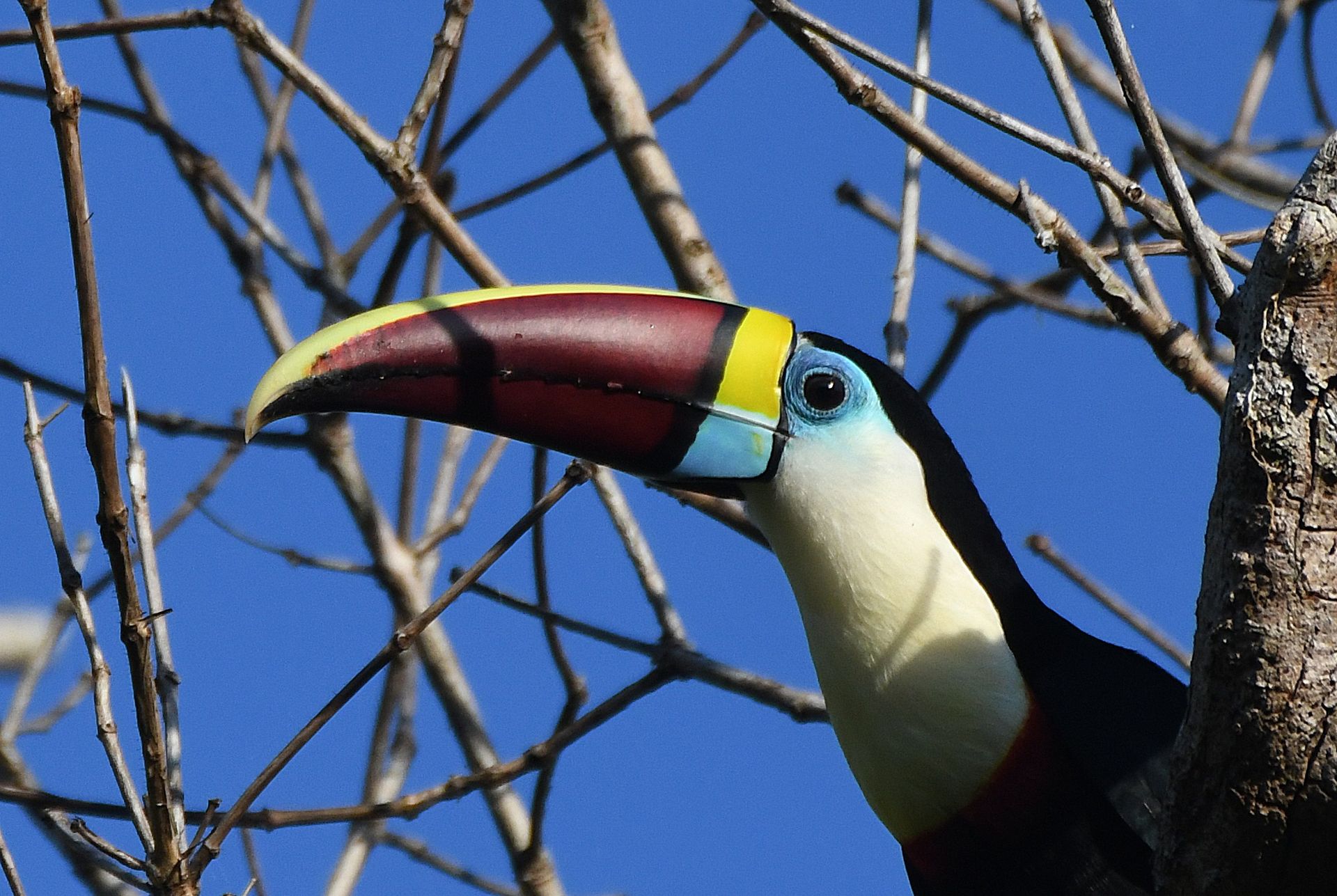
— Dylan Nogueira Sarmento, Amazon Eco TravellersFor travellers whose main goal is birds, the dedicated 7-day Birdwatching expedition is guided with that focus and moves through habitats chosen for species diversity.
Who guides you, and how groups work
All of our tours are led by naturalist guides who live and work in this region, not seasonal staff flown in for the trade. Groups are private or small (a minimum of two participants), and tours are run in English, Portuguese, Spanish, and German. Because the guide who answers your first message is usually the guide who takes you into the forest, you can ask specific questions before you ever book.
If you are still deciding, the simplest next step is to tell us how many days you have and what you most want to see, and we will point you to the right route.
Key takeaways
- All central-Amazon tours depart from Manaus, on the Rio Negro at the Meeting of the Waters.
- Days are built around dawn and dusk activity: canoe trips, jungle walks, wildlife, communities, and night searches.
- Three days is the practical minimum for undisturbed forest; five or more for wildlife and remoteness.
- High water favours canoe trips through flooded forest; low water favours walking and beaches. No bad season.
- No operator can promise a specific animal. Dolphins, primates, caimans, and many birds are commonly seen.
- Naturalist guides; private and small groups from two people; English, Portuguese, Spanish, German.
Frequently asked questions
How many days do you need for an Amazon tour from Manaus?
A minimum of three days and two nights lets you reach quiet forest beyond the day-trip zone. Five or more days reaches the Rio Negro basin and flooded igapó, where wildlife density is highest. A single day from Manaus is worthwhile but stays close to the city.
When is the best time of year to visit the Amazon?
There is no bad season. High water (roughly the first half of the year) is best for canoe trips through flooded forest; low water (the second half) opens trails and river beaches for walking. Wildlife is present year-round, so the season shapes the style of trip more than whether you should come.
Will I definitely see pink river dolphins or jaguars?
Pink and grey river dolphins are commonly seen on our trips and are very likely. Large cats such as jaguars are elusive and can never be guaranteed by any responsible operator. We take you into the habitats where wildlife lives and maximise your chances, but sightings depend on season, luck, and time in the forest.
How far from Manaus do the tours go?
Day tours stay within a few hours of the city. Multi-day expeditions travel further out, up the Rio Negro and along the Amazon, into remote channels, igapó forest and forest camps, which is where the quietest, wildlife-rich areas are found.
What languages are the tours run in?
Tours are guided in English, Portuguese, Spanish, and German. Group sizes are private or small, with a minimum of two participants.
Choose your Amazon tour
From a single day to an 8-day expedition, all departing Manaus.
3 Days / 2 Nights
Jungle Lodge Expedition
Meeting of the Waters, riverside lodge, piranha fishing, caiman search, jungle walk.
View tour5 Days / 4 Nights
Amazon Explorers
Rio Negro basin, canopy tower, flooded igapó, dolphin habitat, lodge and riverboat.
View tour8 Days / 7 Nights
Ecological Expedition
Our most comprehensive route, from Ducke Reserve canopy to the Madeira River.
View tourRelated field notes
Seasonality
Best Time to Visit the Amazon: A Month-by-Month Guide
Wildlife
Pink River Dolphins: Where and How to See Them
Coming soon
Birdwatching
Amazon Birdwatching on the Rio Negro
Coming soon